Digital Marketing Plan: How I Write One in 7 Steps
 My short answer
My digital marketing plan has 7 steps: set goals you can count, work out what a customer can cost, set the budget backwards from that, pick 1 or 2 channels, plan the ads you need, fix tracking, and write down when you stop. It fits on one page. If the budget can't buy 30 conversions a month, start smaller.
A digital marketing plan should fit on one page. Most don’t. They open with a market overview, a SWOT, four personas with stock photo faces, and a list of channels with no budget next to any of them.
I’m a media buyer. I’m the one who puts the money behind the plan and watches what it does. The plans that hold up all answer the same 7 questions, with numbers. Here is how I write one, step by step, with a template you can copy at the end.
What a digital marketing plan is, and what it isn’t
A digital marketing plan is a short list of decisions with numbers attached: what you want, what a customer can cost, how much you spend, where, and when you stop. It is not a market report. If a line in it can’t be proved wrong in three months, it’s description, not plan.
That’s also my answer to anyone asking how to write a marketing plan for the first time. Creating a marketing plan starts with the numbers, not the slides. Call it a digital marketing plan, an online marketing plan or an internet marketing plan, it’s the same page.
A plan
- Allowable cost per customer, in money
- Budget worked backwards from it
- One reason per channel, named
- New ads a month, and who on your side makes them
- The number that means stop
A wish list
- Grow revenue and build the brand
- Budget set as a percent of turnover
- Every channel our competitors run
- Content pillars and a tone of voice
- Nothing that can be proved wrong
Digital marketing plan vs digital marketing strategy
People use the two words for the same thing. They aren’t. Your digital marketing strategy is the big choice: who you sell to, why they pick you, and which online channels fit. The plan turns that into numbers for the next 3 to 12 months. Strategy says where. The plan says how much, by when.
Most of the digital marketing strategies you read about (content, SEO, influencers, paid ads) are options inside the strategy. The plan picks 1 or 2 and puts a budget on them. Think of the strategy as your digital marketing strategy framework, and the plan as the budget sheet under it. An online marketing strategy with no plan is a direction with no way to tell if it’s working.
How to create a marketing plan in 7 steps
Here is the order I’d go in. Each step answers one question, and each answer feeds the next one, so don’t skip ahead to channels. Picking Instagram or Google first, then hunting for a budget and a goal that justify it, is how most plans go wrong.
1. Set digital marketing goals you can count
“Grow the brand” is not a goal. A goal has a number and a date: 60 new customers a month by March, or 200 leads a month at under $25 each. Good digital marketing goals are boring to read, and that’s the point.
Pick one main goal. Likes, reach and followers can sit under it, but the plan gets judged on the one number that pays the bills.
2. Work out what a customer can cost
Take the profit on one order after the product, delivery and payment fees. Not the revenue. Then think about how often a customer buys again in a year.
- Revenue is the wrong number: an $80 order that costs $38 to make and deliver leaves $42 to spend on getting that customer.
- Repeat buys raise the ceiling: if people buy again, a customer is worth more than one order, and you can pay a bit more to get them.
- Cash decides the rest: if money is tight, aim to pay back the ad cost on the first order. Don’t plan on profits from year two.
That last number, what you can pay for one new customer, is the most important line in the plan. Everything below comes from it.
3. Set the budget backwards
What a customer can cost, times how many customers you want a month, is your budget. Then check it can buy at least 30 conversions a month on each channel. Google’s own Target CPA help page recommends measuring performance over the last 30 days with at least 30 conversions.
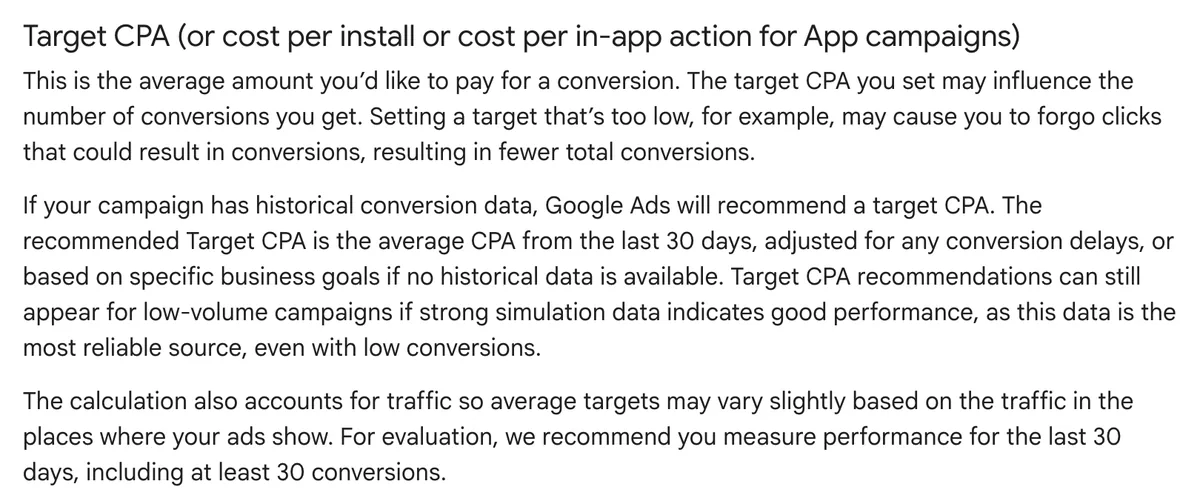
Below 30, a good week and a bad week look the same, and you end up deciding on noise. So if a customer costs $100, the smallest budget you can judge is $3,000 a month per channel. At $250 a customer, it’s $7,500.
4. Pick 1 or 2 channels
Fewer than you want. Split $6,000 across 4 platforms and each one gets $1,500. At $100 a customer that’s 15 sales a month each, and none of them gets enough data to learn from. Then all 4 look bad, when the real problem was the budget per platform.
- Start with one: the one where your buyers already are, or already search.
- Add a second once the first one makes money and stops teaching you anything new.
- Name the ones you’re skipping: “No LinkedIn this year, our buyers don’t shop for this at work” saves an argument later.
If you’re still choosing, my list of digital marketing tools covers the platforms and what each one is good at.
5. Plan the ads you’ll need
I don’t make ads. I put money behind them and see how long they hold up. When the same 2 ads run for months, the people seeing them get tired of them and costs creep up. So the plan says how many new ads you need each month, and who on your side makes them.
A simple rule: more budget means more new ads, because a bigger budget shows the same ad to the same people faster.
6. Fix tracking before you spend
Write down what’s tracked today, what’s broken, who fixes it and by when. Every account has something broken. The usual ones:
- A pixel firing on the wrong page, so every product view counts as a sale.
- A checkout on another domain that loses the visitor halfway.
- No server side tracking, so iPhone sales look like half of what they were.
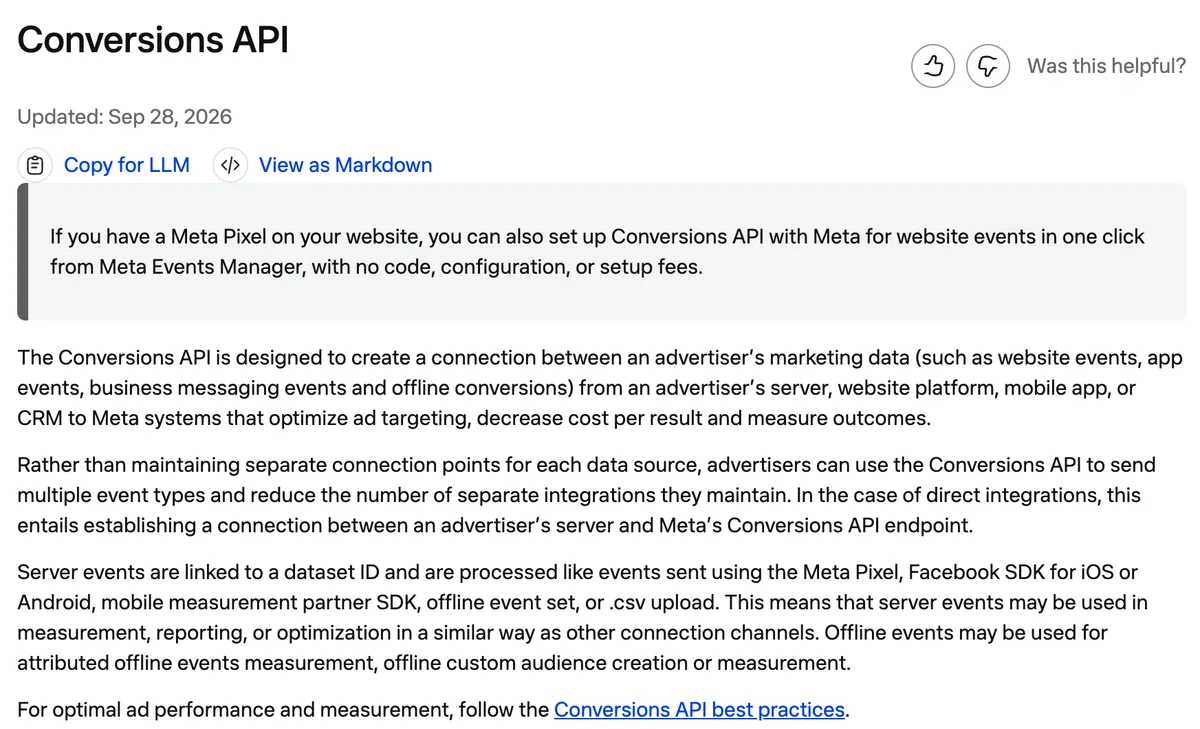
Meta’s Conversions API fixes the last one by sending sales from your server, not only the browser. If you already have the Meta pixel, Meta’s docs say you can switch it on from Events Manager in one click, with no code.
Then pick the one number the plan is judged on. The ad platform and your own sales system will never match. Usually your own sales win. My guide to advertising tracking goes deeper on setting this up.
7. Write down when you stop
This is what makes a digital marketing plan a plan and not a wish list. Write the number that takes money out of a channel: “If a customer costs more than $60 for 4 weeks in a row, cut Meta by half.” If nothing in the plan can be proved wrong, nothing in it can be proved right either.
And test small first. Before real budget goes behind a new channel or a new offer, a couple of weeks on a small budget tells you if the numbers hold.
A one page marketing plan template
Copy this into a doc and fill in the right column. If a row stays empty, that’s the part of your plan that isn’t decided yet. Keep it to one page. Anything that doesn’t fit in this table is background, and background can live in a separate file nobody has to read.
| Section | What to write | Example |
|---|---|---|
| Goal | One number and a date | 60 new customers a month by March |
| What a customer can cost | Profit per order, adjusted for repeat buys | $42 |
| Budget | Customers wanted times what each can cost | $2,520 a month |
| Channels | 1 or 2, one reason each, plus what you’re skipping | Meta first, Google once Meta makes money. No TikTok yet |
| Ads | New ads a month and who makes them | 4 new ads a month, made by the brand’s team |
| Tracking | What’s broken, who fixes it, by when | Conversions API on by 15 December |
| The judge | The one number the plan is judged on | Orders in the store’s own system |
| Stop rule | The number that takes money out | Over $60 a customer for 4 weeks |
That’s the whole marketing plan template. Eight rows, and it works the same for a small online shop or a big brand’s digital marketing plan. If you’re writing it for someone else to sign, a social media marketing proposal is the document that turns it into a scope.
A digital marketing plan example, worked through
Say you sell skincare online. Your average order is $80. Product, delivery and payment fees come to $38, which leaves $42. Customers buy about 1.4 times in their first year. You want 60 new customers a month and you need the ads to pay back on the first order.
| Line | Number |
|---|---|
| Average order | $80 |
| Product, delivery, payment fees | $38 |
| Left per order | $42 |
| Orders per customer in year one | 1.4 |
| Worth of a customer in year one | $58.80 |
| What a new customer can cost (pay back on order one) | $42 |
| Customers wanted a month | 60 |
| Monthly budget | $2,520 |
| Smallest budget to judge one channel (30 conversions) | $1,260 |
So the budget works for one channel, and only just for two. In this digital marketing plan I’d run one channel for the first quarter, judge it on 60 orders a month in the store’s own system, and add the second channel only when the first one hits $42 or less.
Planning for the Gulf
A digital marketing plan written for the US or Europe misses a few things here. Cash on delivery, the Ramadan and White Friday calendar, ads in two languages, and the permits creators need all change the numbers. None of them is hard. They just have to be in the plan from day one, not found out in month three.
- Cash on delivery: count delivered orders, not placed ones. Some cash orders get refused at the door, and a plan built on placed orders shows a profit that never arrives.
- The calendar: Ramadan, Eid and White Friday move both your sales and your ad costs. Plan the budget by month, not as one flat number. My Ramadan marketing guide covers that season.
- Two languages: Arabic and English ads are two sets of ads to make and test. Count both in step 5.
- Creators: in the UAE, anyone promoting a brand needs the Media Council’s advertiser permit. In Saudi Arabia, influencers need a Mawthooq licence. Check before you book.
What I’d do with a small budget
Under about $5,000 a month in total, keep it simple. One goal, one channel, one number to judge it on. Run it for a quarter before you change anything big. Most small plans fail because they try to do four things at once, not because they picked the wrong platform.
- Pick the channel closest to the sale: search if people already look for what you sell, Meta if they need to see it first.
- Spend on tracking before you spend more on ads. A small budget can’t afford to guess.
- Write the stop rule on day one, before you’re attached to the results.
Once the first channel works, the daily side of running it is media buying, and the plan becomes the brief for it.
Not sure your digital marketing plan adds up? Talk to me.
Questions people actually ask
What should a digital marketing plan include?
Seven things: one goal with a number and a date, what a customer is allowed to cost, the budget that follows from it, 1 or 2 channels with a reason for each, how many new ads you need a month, how sales get tracked, and the number that makes you stop. Anything else is background, not plan.
What is the difference between a digital marketing plan and a digital marketing strategy?
The strategy is the big choice: who you sell to, why they pick you, and which online channels fit. The plan turns that choice into numbers for the next 3 to 12 months: the budget, the channels, the goal and the point where you stop. Strategy says where you're going. The plan says how much it costs to get there.
How much budget does a digital marketing plan need?
Enough to buy 30 conversions a month on each channel you run, because Google recommends judging performance over 30 days with at least 30 conversions. If a customer costs you $100, that's $3,000 a month per channel. If your budget can't reach that, run one channel only until it can.
How long should a digital marketing plan be?
One page, plus a budget table. The value is in the decisions, not the document. A plan that runs to 40 slides is mostly describing the market. If you can't fit your plan on one page, it isn't finished yet.
How many channels should a small business start with?
One. Add a second only once the first one makes money. Split a small budget across 4 platforms and none of them gets enough sales to learn from, so all 4 look bad. Rarely run more than 3 channels under $50,000 a month in ad spend.
How often should you update a marketing plan?
Look at the numbers every month and rewrite the plan every quarter, only the parts that broke. What a customer can cost only changes when your prices, your margin or how often people buy again changes. Rewriting the whole thing every month means the numbers in it were never real.